Dad, I've arranged it — we're at Sophie's at 3
From too shy to ask, to running her own playdate scheduling with backup plans — one full practice in being there without deciding for her.
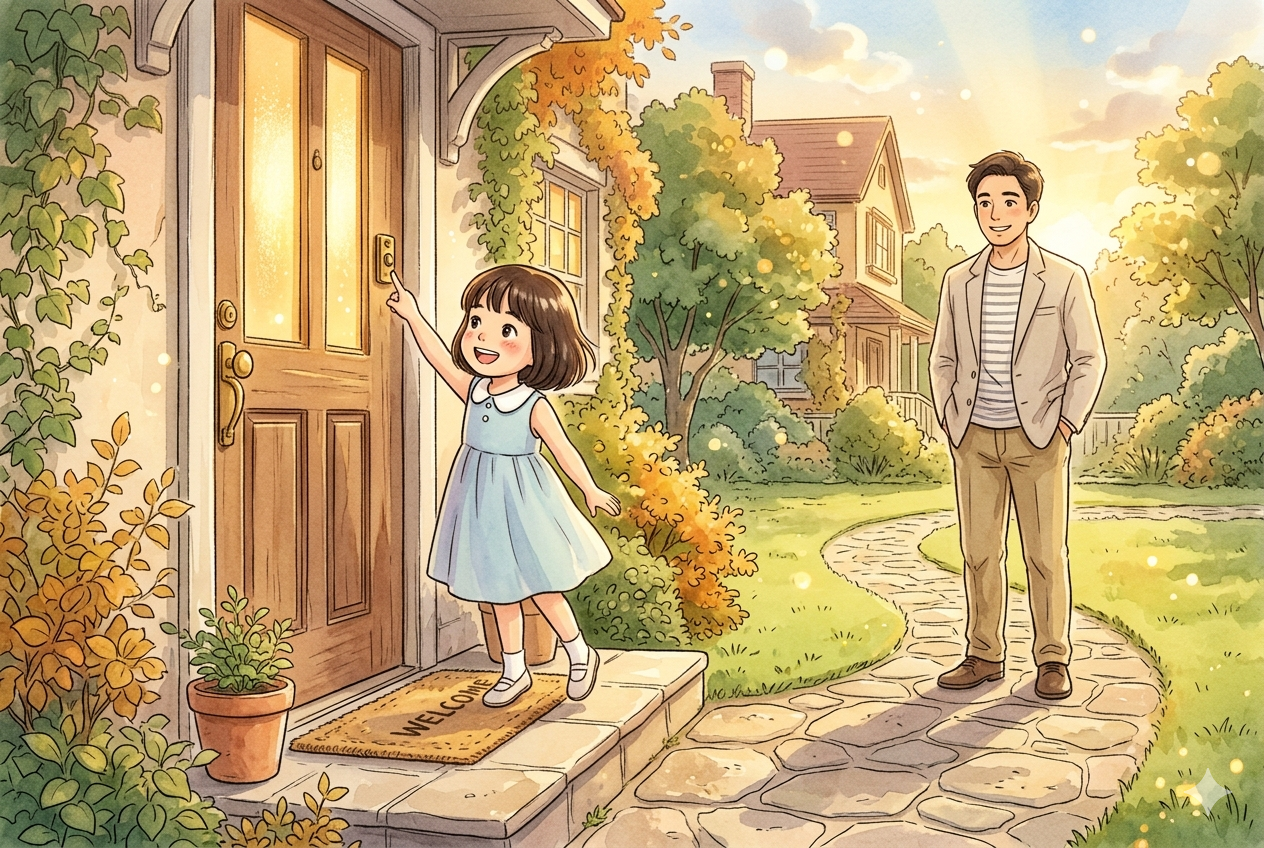
Dad, I’ve arranged it — we’re at Sophie’s at 3
She turns five in two months. After every Sunday service she handles her own scheduling — she asks, she arranges, she comes back and tells me whose house we’re going to that afternoon.
Where she is now
Sunday service ends. We finish the church lunch. She walks over and says:
“Dad, I’ve arranged it. We’re at Sophie’s at 3.”
Not a question. A done deal, calmly announced.
She has a short list of families on rotation. She works through it in order — first family, then the next if they can’t. If the whole list comes up empty, she comes back and we brainstorm together who else to try.
It sounds like a small thing. But if you’d seen where she started, you’d know it isn’t — and that the casual ease is engineered.
Looking back, here’s how it grew
Stage 1: She didn’t dare ask. I showed her how. I helped her think of who to visit. She stood next to me and watched me make the ask. I didn’t push her in. I just let her see the moves: how to say hello, how to ask, how to handle a “no.”
Stage 2: She’d ask, but only with me there. She’d open her mouth, but only if I was right next to her. So I stood there — not answering for her, not jumping in.
Stage 3: She dared, but kept forgetting. For a few weeks she’d be having too much fun and forget to ask, and the afternoon would come with no playdate. All I said was:
“Next time, let’s both remember. This is your playdate. You decide who you want to play with. I’ll think with you. I’ll go with you to ask.”
On those playdate-less afternoons, she’d say it on her own: “I forgot. Next time I’ll remember.” That natural consequence — her own feedback, her own correction — did more work than ten lectures from me.
Stage 4: She remembered, and a backup plan grew. I don’t remember which week it started, but she made her own list. If the first family couldn’t, she’d go ask the second. Then she’d come back and we’d talk about who else might be free, and a third name appeared, and a fourth.
Stage 5: She asks on her own, then comes back and tells me what we’re doing. Now I’m just the driver.
Being there isn’t deciding for her
What I did through all of this was little. What I deliberately didn’t do was more.
What I did: I modeled the asking when she didn’t dare; I stood next to her, silent, when she dared but needed me close; I stepped back to driver duty once she was running it herself. On the afternoon she forgot, I didn’t jump in to fix it — I let the empty afternoon happen. When she came back to brainstorm, I thought alongside her, but I never decided for her who to ask.
What she did was a lot more: speak up to an adult for the first time; walk to the next house after a “no”; sit with her own forgotten afternoon and write it into next week’s plan; build the list herself, sequence it herself, try again. None of those steps were big. Every one of them was hers.
This is the most complete version I’ve practiced of “I’m here, you lead, I help only when you ask.” No nudging. No “come on, you should…”
Her earlier stage wasn’t “she doesn’t know how to ask.” It was “she doesn’t dare to ask.” She’s bolder now not because her temperament changed, but because she’s confirmed it again and again: get the ask wrong, get rejected, forget — Dad’s still here.
She doesn’t earn my presence by performing. The presence is already hers.
“There is no fear in love, but perfect love casts out fear.” (1 John 4:18) “We love because he first loved us.” (1 John 4:19)
What she’s learning from me, I’m learning from God. And through her, I’m learning all over again what it looks like to be loved.
She turns five in two months. I’m so proud of who she’s becoming.