Home Gym: A Near Zero-Friction Way to Start Training
Home Gym: start with zero friction. Refuse unnecessary machines and complexity.
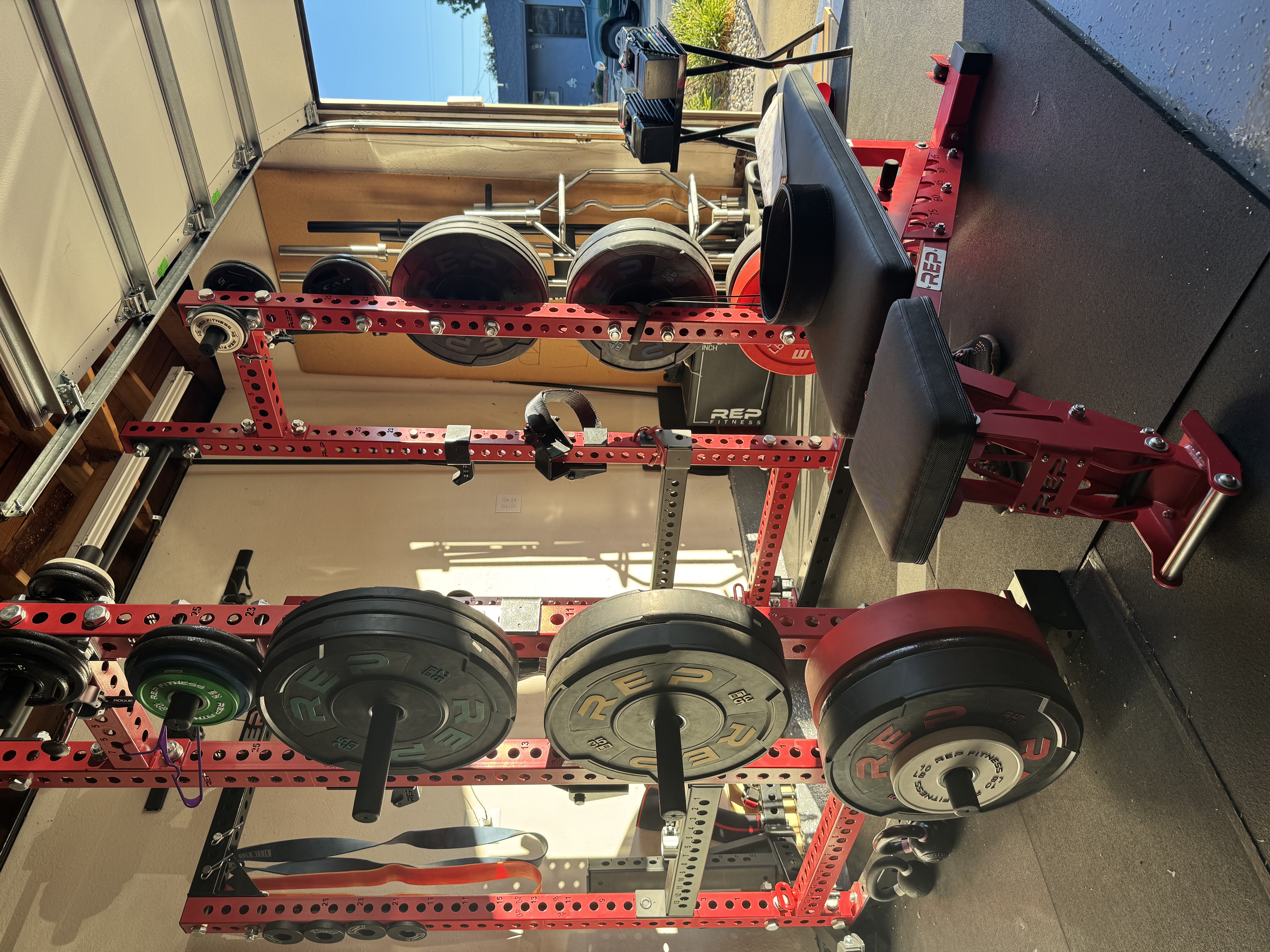
My home gym
Home Gym: Reduce the Friction of Starting Training to Almost Zero
flowchart TD
  classDef friction fill:#fee2e2,stroke:#ef4444,color:#7f1d1d
  classDef zero fill:#ecfdf5,stroke:#10b981,stroke-width:2px,color:#064e3b
  classDef principle fill:#eff6ff,stroke:#3b82f6,color:#1e3a5f
  classDef result fill:#fefce8,stroke:#eab308,stroke-width:2px,color:#713f12

  subgraph GYM["Commercial gym"]
    direction TB
    G1["Drive 12 min"]:::friction
    G2["Wait for equipment 5-10 min"]:::friction
    G3["Overhead ≈ 50% of training time"]:::friction
    G1 --> G2 --> G3
  end

  subgraph HOME["Home gym"]
    direction TB
    H1["Home to training area: 2 seconds"]:::zero
    H2["Rain or shine, no decisions"]:::zero
    H3["Training = default option"]:::zero
    H1 --> H2 --> H3
  end

  GYM -.->|"Strip all non-training cost"| HOME

  HOME --> RULE

  subgraph RULE["Minimalist principles"]
    R1["Free weights only"]:::principle
    R2["Barbell / dumbbells / kettlebells"]:::principle
    R3["60-80 min, done"]:::principle
  end

  RULE --> OUT["Low friction, low cognitive load<br/>a system that compounds for years"]:::result
My view on a home gym is simple: make training something you can do anytime. Not by chasing a bigger setup or looking “pro,” but by using the smallest effective configuration to get maximum time efficiency and consistency.
Principles: Keep Only What’s Necessary, Remove Everything Else
- Free weights only: no fixed machines (leg press, pec deck, cable fly—none of that is necessary)
- Only three categories of gear: barbell / dumbbells / kettlebells
- Keep each session within 60–80 minutes: the goal isn’t staying longer—it’s finishing what matters, and doing it solidly
The Core: The Real Value of a Home Gym Is “Zero-Friction Start”
The best part isn’t having a lot of equipment. It’s this: when you want to train, you can start immediately.
- From home to training area: 2 seconds
- Rain or shine: no weather checks, no crowds, no needing to “talk yourself into the mood”
- Training becomes the default option: no decision-making, no emotional warm-up—just start
For me, consistency isn’t a willpower problem. It’s a system design problem. A home gym works because it designs the “start” step to have almost no resistance.
Comparison: The Hidden Costs of a Commercial Gym Are Often Huge
When I used a commercial gym (24H / Planet Fitness), what burned time wasn’t the training—it was the “non-training costs”:
- Driving round trip: about 12 minutes (5 there + 2 parking + 5 back)
- Waiting for equipment, looking for equipment: 5–10 minutes
- Total: at least 20–30 minutes gone
More bluntly: you think you’re going for “60 minutes of training,” but a lot of the time it’s “60 minutes of training + 30 minutes of loss.” That back-and-forth plus waiting can easily be close to 50% of your total time spent.
If you go twice a week, the time you burn adds up fast—often enough to finish one extra training session at home.
And more realistically: without a home gym, as a single parent, training can easily become something that’s simply not sustainable. Not because I don’t want it, but because the cost is too high and the friction is too real.
Why I Deliberately Exclude Fixed Machines: They Don’t Fit My Minimalist Core
People ask: should a home gym add a leg press, pec deck, cable machine? My answer is usually: no. Not because machines are useless, but because they’re not worth it—and not necessary.
-
The economics don’t make sense
- Fixed machines are expensive, and most of the time they just make certain movements more comfortable
- I want the smallest setup that covers the largest training surface area—not a dedicated machine for every angle
-
Space and maintenance cost more than you think
- The footprint is the easy part; the real cost is layout, storage, cleaning, visual noise, and added friction
- Over time, that eats away at the home gym’s most valuable advantage: instant start
-
They’re not versatile
- Free weights are one toolkit that can cover everything: intensity, variation, technique
- Fixed machines usually serve one path and one use—you don’t get back the flexibility of free weights
-
Once you start adding machines, the system drifts
- Training turns into “collecting gear”: notice a gap, buy another machine
- That pulls the home gym away from a low-friction system and back into a project that keeps increasing complexity
My minimalist approach isn’t about having less. It’s about being effective, repeatable, low-maintenance, and compounding over the long run. Fixed machines make it easier for this system to stop being clean.
Conclusion: A Home Gym Is a System That Extracts Maximum Value From Limited Time
The core value of a home gym isn’t “having a lot of equipment.” It’s “maximizing the return on limited time.”
I’m not trying to build a perfect gym. I’m building a system: make training low-friction, low cognitive load, and a default option that can compound for years.
A home gym is my way of designing the training workflow to the lowest possible friction—my starting move.