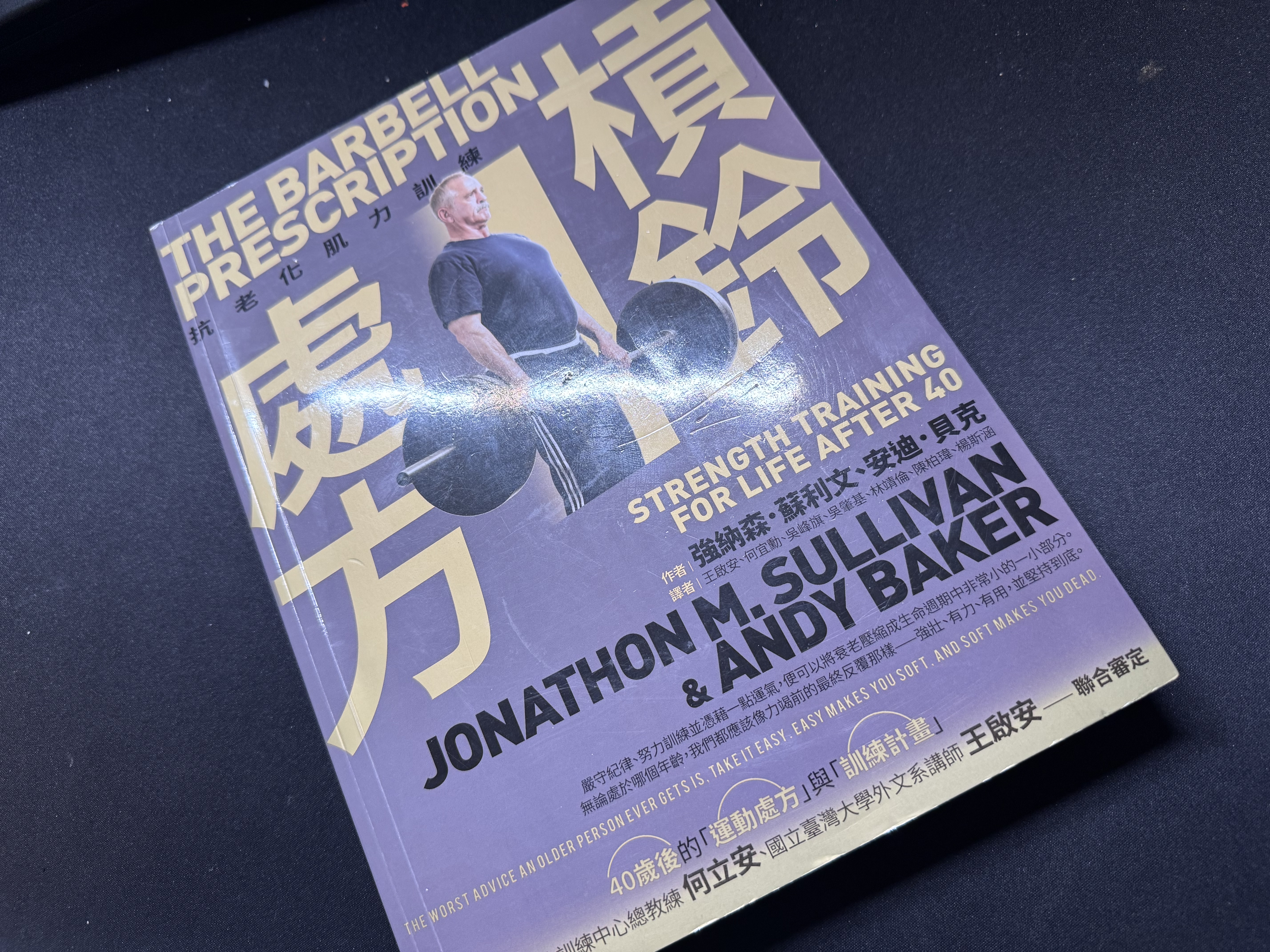
A Strength Training Mindset Primer for People Who Aren’t Young
A minimalist post-read on The Barbell Prescription: the big principles worth carrying.

The Barbell Prescription — A Few Things I’m Keeping
flowchart TD
  classDef old fill:#fee2e2,stroke:#ef4444,color:#7f1d1d
  classDef shift fill:#fff7ed,stroke:#f59e0b,color:#78350f
  classDef new fill:#ecfdf5,stroke:#10b981,stroke-width:2px,color:#064e3b

  Y["More stimulus → faster growth"]:::old
  Y -.->|"The 35+ shift"| M
  M["Recovery drops dramatically<br/>Same stress, days to recover"]:::shift
  M --> S1["Not harder — more precise"]:::new
  S1 --> S2["Manage load and recovery"]:::new
  S2 --> S3["Strength = long-term asset"]:::new
  S3 --> GOAL["Low injury, sustainable<br/>a system that keeps compounding"]:::new
Original author: John Nelson Sullivan
What is this book actually about?
In one sentence: If you want to live well after midlife—to move, to function, and to not have your body drag your life down—you need strength training, not more cardio.
Cardio obviously has value—heart and lungs, breathing, tolerance, all of that improves. But the author’s point is clear: what really determines whether you can “move freely” when you’re older is strength.
When moving becomes hard, it’s usually not “you didn’t try hard enough.” It’s “you’re not strong enough.”
Two things I took away: recovery & load
If I had to compress it into two words:
- Recovery
- Load / stress
1) What’s the difference between not-young and young?
Not willpower. Not motivation. It’s this— recovery capacity is dramatically different.
Think of it like this: the same training stress that a young person recovers from the next day might take a middle-aged person several days. If you keep running the “more volume is always better” playbook, you eventually drift toward chronic fatigue and the edge of injury.
If we’re talking age, I think it starts at 35. The book says 40.
2) So what’s the strategy?
Not harder. More precise.
- The stimulus has to be enough, but it can’t exceed your recovery ceiling
- Progress can be slow, but it has to be sustainable
- What you’re after is “long-term accumulation,” not “short-term highs”
The book’s idea of the “intermediate long-term trainee” matters
What stuck with me is how broadly it defines “athlete”: you don’t have to be a pro. If you’re the kind of person who trains long-term, takes it seriously, and wants to do it for life, you count.
And this group’s most common problem isn’t “not trying hard enough.” It’s:
- trying to force progress with the same method forever
- getting stuck, then compensating by adding more volume
- eventually blowing up recovery
So midlife training is basically management: manage load and recovery so strength becomes a long-term asset.
What I’m taking from this book
- Strength training is a necessity, not an option.
- Cardio is great, but it’s not the core solution for “being able to move.”
- After midlife, success often comes down to recovery management, not how hard you can push.
- What’s actually worth pursuing is: low injury risk, sustainable progress, and a system that keeps accumulating.
If the slogan when you’re young is “more stress, faster growth,” then after midlife it’s more like: “you only get to progress if recovery can keep up.”
Closing
This book isn’t trying to teach you how to get big. It’s making a more practical point:
How do you age while still being able to walk, move, and do what you want to do?
For people who are still training seriously after 35, it’s worth reading—and worth re-reading.